







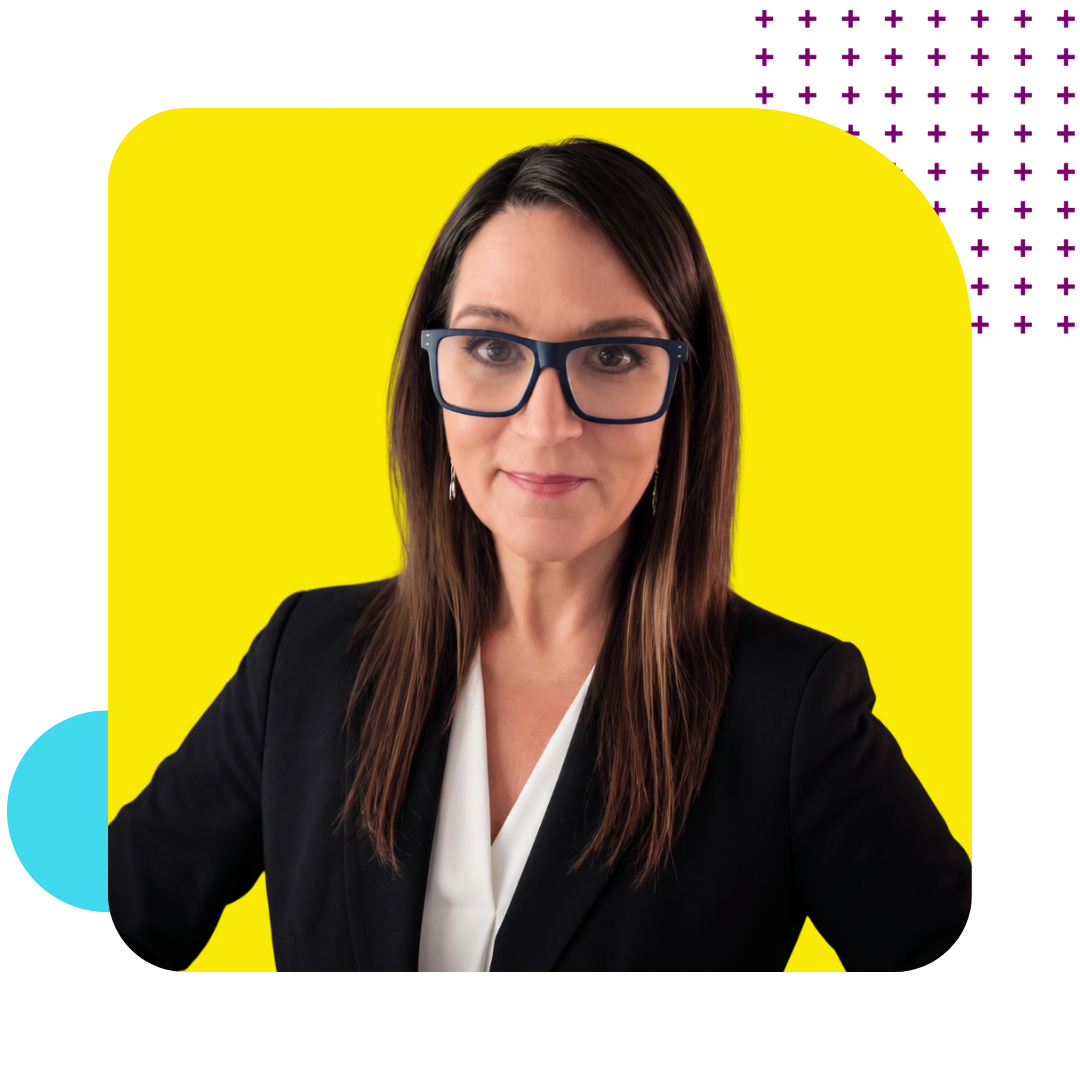
With more than 24 years’ experience as a Speech and Language Therapist, Sandy, National Manager of Better Days UK, brings a distinctive combination of clinical expertise, leadership, systems thinking and lived experience to Better Days.
Sandy brings extensive experience across clinical practice, SEND, statutory services, service development and international advocacy, alongside advanced qualifications in communication and systems thinking. As National Manager of Better Days UK, she is now helping to grow a multidisciplinary allied health service grounded in clinical quality, thoughtful service design and person-centred support.
Her approach to neurodiversity-affirming practice begins with a simple principle: communication should not be judged against a single idea of what is “normal”.
“When I meet a child who is not yet speaking, or not speaking in the way people expect, my starting point is that there is a person in there with things to say, and the work is to find the route.”
For Sandy, that means recognising and respecting the many different ways people communicate – including AAC, signing, echolalia, scripting and gestalt language.
“Echolalia, scripting, gestalt language, signing, a communication book, a device, a look, a hand on a sleeve: these are not lesser versions of speech waiting to be upgraded. They are communication, doing its job.”
It also means looking beyond the individual. Sandy believes clinicians need to consider the environments and systems surrounding a person, rather than automatically locating a communication difficulty within them.
“Communication is transactional. It happens between people and inside contexts, and I find it hard to look at a child in difficulty without also looking hard at the room they are in.”
Challenging what therapy is trying to achieve
Sandy’s lived experience of neurodivergence has also shaped the questions she asks about traditional speech and language therapy goals.
Goals such as increasing eye contact, reducing scripting or teaching “appropriate” social behaviour can appear clinical on paper, but Sandy believes practitioners need to consider whose needs those goals are really serving.
“Sometimes what is being asked of me, underneath the professional language, is to help a child mask more convincingly. I know the cost of that from the inside, and it is not a small thing to be asked to teach it.”
That willingness to question established practice extends to Sandy’s own work.
During a systems-thinking project examining how therapy goals were set with young people in secondary schools, she discovered that young people themselves were often largely absent from decisions about what their therapy should achieve.
“The child was receiving therapy intended to improve their communication, while having remarkably little power over deciding what better communication would mean for them.”
For Sandy, the experience reinforced an important principle of genuinely person-centred and neurodiversity-affirming care: clinicians must be prepared to examine not only the person in front of them, but their own practice and the systems surrounding that person.
“Sometimes the most important clinical question is much simpler: What if it is us?”
Three questions Sandy believes clinicians should ask
Sandy returns to three questions when considering whether a therapy goal is genuinely neurodiversity affirming:
- “Whose need is this goal meeting?”
- “Am I adding to how this child communicates, or trying to replace it?”
- “When this is not working, whose design am I questioning first?”
These questions capture the approach Sandy brings to Better Days UK: one grounded in clinical expertise, lived experience and a willingness to challenge established ways of working when they do not serve the person receiving support.
As she puts it:
“They keep me on the side of the child, which, on the days when the two chairs feel very far apart, is the only place I am sure I want to be.”
We’re incredibly pleased to have Sandy on board, bringing her depth of clinical experience, leadership and neurodiversity-affirming approach to Better Days UK.
Sandy and the Better Days UK team are supporting children, young people and adults across Greater London with high-quality, person-centred allied health services.
To make a referral or find out how Better Days UK can support someone you work with, get in touch with our team today.