







Your home should be a place where you, or the person you care for, can move around safely, look after yourself and live as independently as possible. When that becomes harder, because of disability, illness, injury, ageing or a child’s changing needs, an occupational therapist can help [1]. In this guide, we explain what OT home and housing assessments are, what they are useful for, and what happens on the day
What is an OT home assessment?
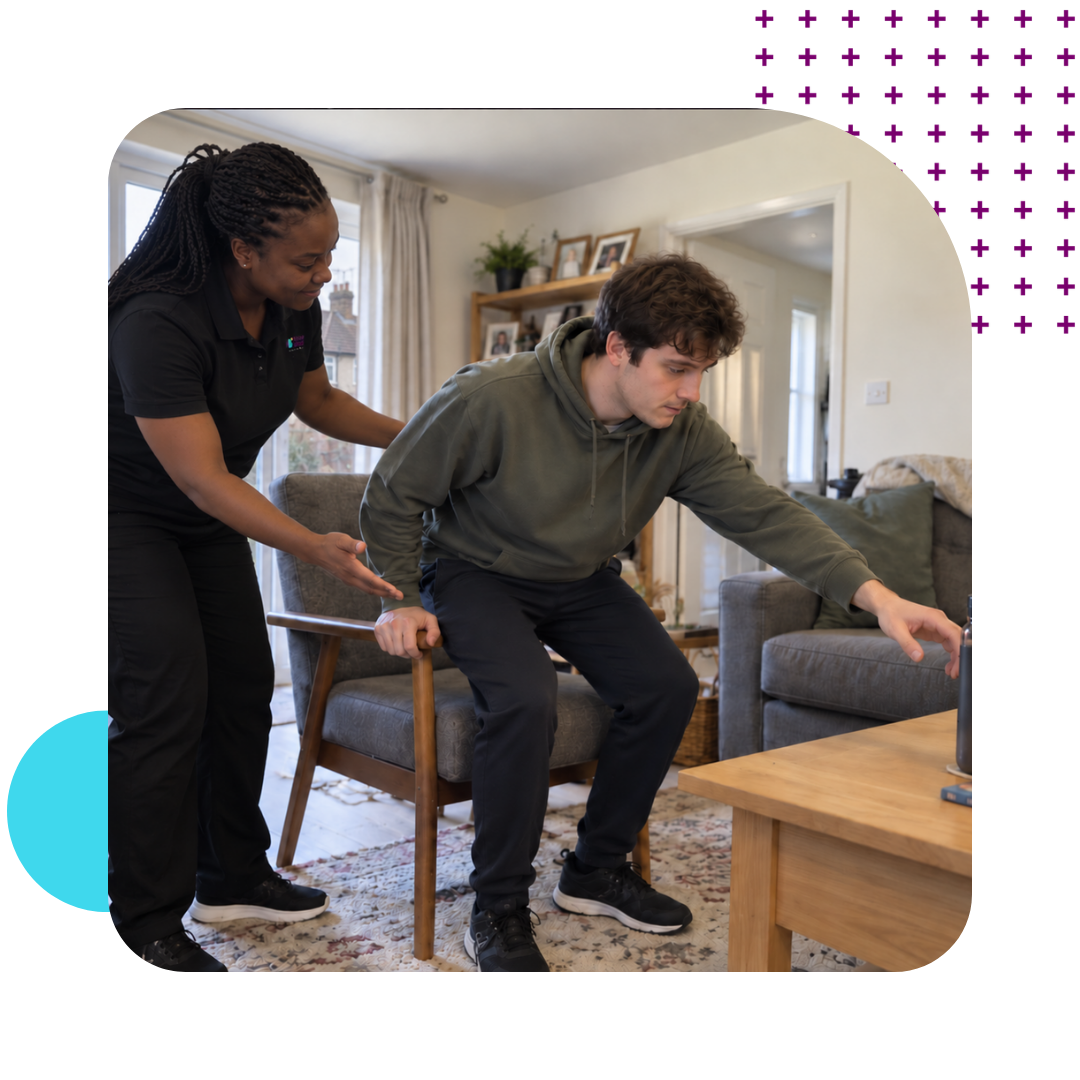
An occupational therapy home assessment is a visit to your home by an occupational therapist. They look at how you manage everyday activities in your own space, such as getting in and out of the house, using the stairs, washing, using the toilet, cooking and getting in and out of bed [1,2].
The OT then recommends practical solutions. These might be equipment, a different way of doing a task, or changes to the home itself, known as home adaptations [1,2].
What is a housing needs letter?
A housing needs letter is a written letter by an occupational therapist that explains whether a home meets a person’s needs, and if not, what kind of home would. It is often used when [3]:
- applying to the council or a housing association to move, and you need evidence of medical or disability need
- the current home cannot be adapted, for example because there is no space for a ground floor bathroom
- planning a move after an injury or a change in health
- supporting a personal injury or care claim, where solicitors or case managers need an independent view
What can an OT home or housing assessment be useful for?
For adults, including older people:
- Coming home safely after a hospital stay, a fall or surgery
- Managing a condition that is changing, such as MS, Parkinson’s or motor neurone disease
- Bathroom adaptations, such as a level-access shower, grab rails or a raised toilet seat
- Getting up and down stairs, for example with a stair lift or extra banister
- Ramps, wider doorways or a through-floor lift for wheelchair access
- Reducing the risk of falls [1–3]
For children and young people:
- A safe space for a child who needs one because of their sensory or behavioural needs
- Bathing, toileting and changing facilities for a child with a physical disability
- Making the home wheelchair accessible
- Evidence for a rehousing application when the family home no longer works [1–3]
How do I pay for home adaptations? What is the Disabled Facilities Grant?
In England, Wales and Northern Ireland, a Disabled Facilities Grant (DFG) from the local council can help pay for adaptations such as ramps, stair lifts, wider doors and accessible bathrooms [4,5]. Grants for adults are means tested, so the amount depends on household income and savings. In England, grants for disabled children are not means tested against their parents’ income [5].
An occupational therapy assessment is usually needed before a grant is approved, to show the adaptations are necessary and appropriate. Council OT waiting lists can be long. Some councils will accept a report from an independent OT, but always check with your council before you book, and never start building work before the grant is approved [5,6].
What happens during an OT assessment?
- Before the visit. We talk with you about what is difficult, any health conditions and what you are hoping for. With your permission, we may ask for information from other professionals.
- The visit. The OT looks around the home and watches how you, or the person you care for, manage key tasks. We measure doorways, steps, bathrooms and other spaces where needed.
- Talking it through. We discuss the options with you, including what can be done now and what needs a bigger change.
- The report. You receive a written report with clear recommendations, measurements and equipment details. Where relevant, it is written so it can support a grant application or rehousing request.
- Follow-up. We can review equipment once it is installed and check it works for you.
Smaller items, such as grab rails and equipment, may be provided free by your council after an assessment [2]. Talk to our team and we’ll help you explore the options available and what they involve.
Frequently asked questions
Do I need an OT assessment to get a Disabled Facilities Grant?
Usually, yes. The council needs evidence that the adaptations are necessary and appropriate. Check whether your council accepts an independent OT report [5,6].
Can I use a housing needs report to move to a new council property?
Yes. The report can provide evidence of your housing needs, although the council or housing association makes the final decision.
Do you assess children’s homes as well as adults’?
Yes. Better Days provides home assessments for children, young people and adults across Greater London.
How can Better Days help?
If your home no longer meets your needs, Better Days can help you understand the options available. Our occupational therapists provide home assessments and housing needs reports for children, young people and adults across Greater London.
To discuss the right type of assessment for you or someone you care for, contact our team, book an OT home assessment, or call 07999 845028.
References
- Royal College of Occupational Therapists. Occupational therapy support [Internet]. London: RCOT; [cited 2026 Nov 17]. Available from: RCOT
- Home adaptations [Internet]. London: NHS; 2025 [cited 2026 Nov 17]. Available from: NHS
- Herefordshire and Worcestershire Health and Care NHS Trust. Occupational therapy: adaptations, equipment and housing [Internet]. [cited 2026 Nov 17]. Available from: Herefordshire and Worcestershire Health and Care NHS Trust
- UK. Disabled Facilities Grants: overview [Internet]. [cited 2026 Nov 17]. Available from: GOV.UK
- UK. Disabled Facilities Grants: what you’ll get [Internet]. [cited 2026 Nov 17]. Available from: GOV.UK
- Department of Health and Social Care and Department for Levelling Up, Housing and Communities. Disabled Facilities Grant delivery: guidance for local authorities in England [Internet]. London: GOV.UK; 2022 [updated 2024 Jul 18; cited 2026 Nov 17]. Available from: UK