





Children often show us that learning and movement go hand in hand. You may notice a child listening while they change position, stand, stretch or hold something in their hands. Another child may enjoy a quick movement break before they begin.
A helpful question to ask is: does the child feel comfortable, alert and ready to join in?
Small chances to move can help some children feel settled, focus and take part throughout the day. A stretch, a short walk or a practical job may be all they need. These moments can fit naturally into familiar routines at home, at school and in the community.
What ‘ready to learn’ means
When you picture a child who is ready to learn, you may imagine someone sitting quietly. Readiness can look much broader than this. A child is ready when they can notice what is happening, respond to others and join in as well as they can.
This is sometimes referred to as an optimal learning state: the child feels comfortable, alert and able to take part. One child may be calm and still, while another may need to move, change position or take a short break.
Movement offers a pause, a change of pace and a chance for a child to notice how their body feels. Some children return to a task feeling more settled or awake. Others become more energetic or prefer a quiet break at that moment. Watching the child’s response helps you learn what works well for them.
Why movement can help children learn and take part
Movement is a natural part of growing, playing and everyday life. It supports children’s physical health, bone health, muscle development, movement skills and thinking skills. Physical activity includes play, walking or wheeling, active travel, practical tasks and sport. In other words, movement can happen in many enjoyable and familiar ways [1].
During the school day, movement may help some children return to their work with renewed attention. Evidence found that children were more likely to stay with a task after active lessons or short movement breaks [2, 3]. Children and studies showed different responses, which is why observation and individual choice matter.
Movement breaks can be small and purposeful
A movement break does not need to be lengthy to be effective. When you know movement helps the child, try it before a task that involves sitting and concentration, or between activities.
You can also build movement into the next job. Gentle or discreet options often fit smoothly into the day. Afterwards, pause and notice: does the child seem more settled and comfortable? Do they find it easier to join the next activity?
Simple ways to bring movement into the day
- Walk to deliver a message, collect a book, or hand out classroom resources.
- Carry or push something manageable, such as books, shopping or a light storage box.
- Stretch upwards, reach from side to side, or slowly copy simple shapes with the body.
- Choose a short walk, a few jumps, seated marching or sit-ups when these feel safe and comfortable for the child.
- Try animal walks, wall presses or standing up from a chair and sitting down again, when these are comfortable and safe for the child.
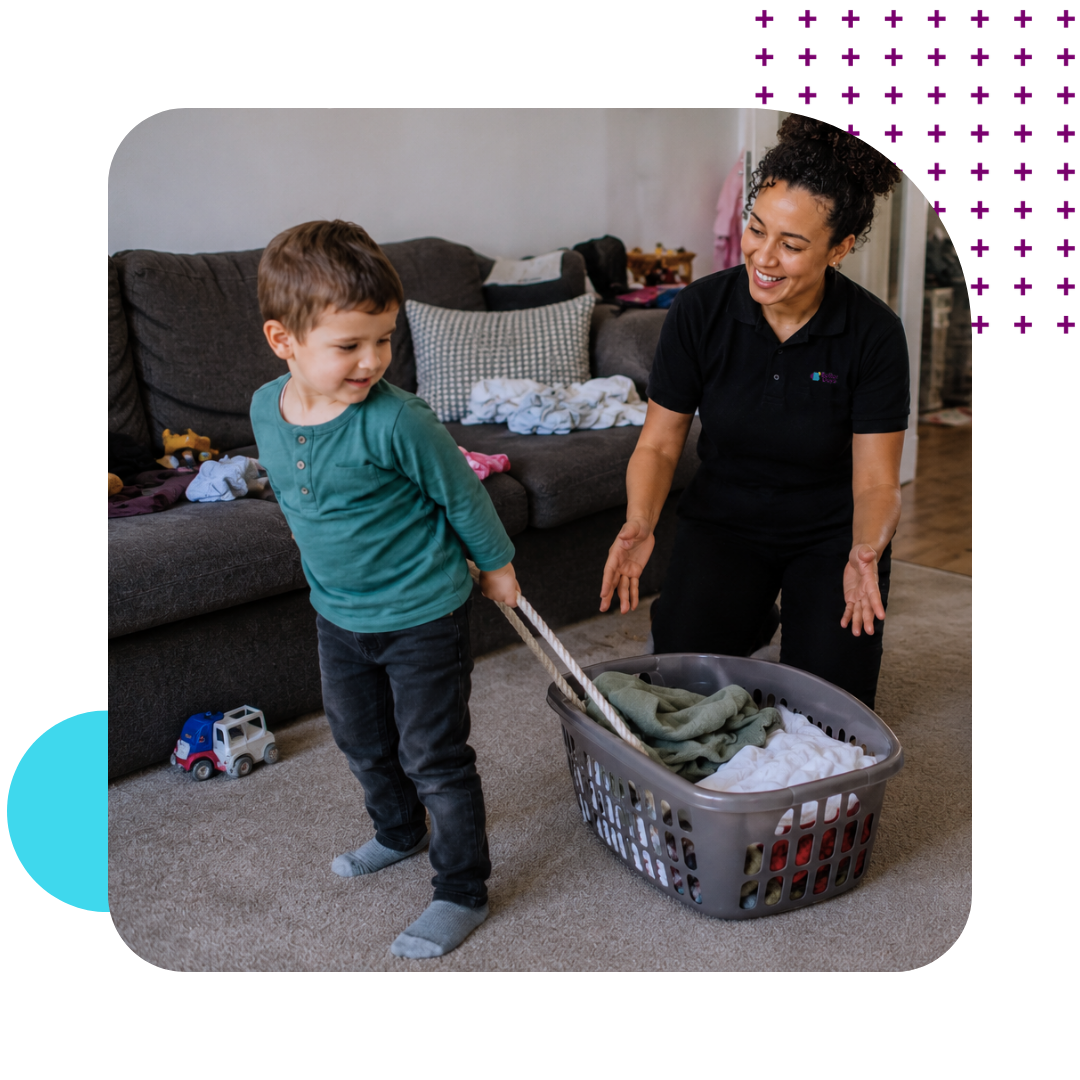
- Build movement into tidying, packing a bag, putting shopping away, or moving between activities.
Movement can become part of the lesson too. Children might stand to sort words, move to different number answers, act out a story or collect one item at a time. They can stay involved in learning while giving their bodies a welcome change.
Find the movement that suits each child
Start with the child and stay curious about their response. Offer choices and notice what they say or show you before, during and after movement. The same activity may help one child feel calmer and another feel more awake.
A different child may choose a quiet break instead. End the activity if the child feels uncomfortable, upset, dizzy or more breathless than expected, or if joining in becomes harder.
Choose activities that suit the child’s age, health, how they move, environment and preferences. Make sure an adult is nearby when needed.
The UK guidance for disabled children and young people supports enjoyable, manageable activity that builds gradually in short chunks across the day [4]. Plan learning breaks around the individual child and what their day involves.
Movement works best as an invitation that supports participation. Offer it according to the child’s needs and preferences, separate from rewards, punishments or judgements about behaviour.
If a child often finds it hard to join everyday activities, an occupational therapist can look at the child, the activity and the environment. They may suggest a different way to do the activity, teach a skill or adapt the environment so participation feels easier. The Royal College of Occupational Therapists describes this participation-focused approach at home, at school and elsewhere [5].
Common questions about movement breaks
How often should children have movement breaks?
The best timing depends on the child and the day they are having. You could try a short, planned break before a seated task, between activities or when the child shows they need a change. Notice what you tried and what happened next. Over time, this can help you discover what works best for your child.
What if movement makes a child more energetic?
This response gives you useful information. Try a shorter break, slower movement, a quieter choice or a calm pause. The aim is to help the child feel comfortable and ready for what comes next, so let their response guide your next step.
Do movement breaks need lots of physical activity?
Movement breaks can be gentle. Standing, stretching, changing position, walking a short distance or helping with a job may be enough. Some children prefer a seated or adapted activity. Follow the child’s choices and any advice from the professionals who know them well.
Can movement be incorporated into classroom activities?
Yes. You might add movement to a lesson, offer helpful classroom jobs or share a short whole-class movement break. This can help movement feel like a natural part of the classroom. Keep participation optional and offer choices that each child can enjoy safely and comfortably.
Helping each child move towards learning
Movement can be one helpful part of a supportive day. Begin with a simple choice, watch how the child responds and make changes together. This flexible approach can support comfort, attention and participation in ways that matter to the child.
Every child has unique strengths, challenges and goals. If you’d like to explore how occupational therapy could support your child, contact Better Days today. Our team would be happy to talk through your child’s needs and help you find the right support.
References
1. Department of Health and Social Care (2019) ‘UK Chief Medical Officers’ physical activity guidelines’. Available at: GOV.UK (Accessed: 29 October 2026); World Health Organization (2024) ‘Physical activity’. Available at: WHO (Accessed: 29 October 2026).
2. Watson, A., Timperio, A., Brown, H., Best, K. and Hesketh, K.D. (2017) ‘Effect of classroom-based physical activity interventions on academic and physical activity outcomes: a systematic review and meta-analysis’, International Journal of Behavioral Nutrition and Physical Activity, 14, article 114. Available at: https://doi.org/10.1186/s12966-017-0569-9.
3. Ruhland, S. and Lange, K.W. (2021) ‘Effect of classroom-based physical activity interventions on attention and on-task behaviour in schoolchildren: A systematic review’, Sports Medicine and Health Science, 3(3), pp. 125–133. Available at: https://doi.org/10.1016/j.smhs.2021.08.003.
4. Department of Health and Social Care and Office for Health Improvement and Disparities (2022) ‘Physical activity guidelines: disabled children and disabled young people’. Available at: GOV.UK (Accessed: 29 October 2026).
5. Royal College of Occupational Therapists (n.d.) ‘Occupational therapy for children and young people’. Available at: RCOT (Accessed: 29 October 2026).